North Korean Operatives Linked to Drift Protocol Hack
One of the more alarming developments to emerge this week involves Drift Protocol, the Solana-based perpetuals exchange. A preliminary investigation has revealed that team members were approached in person at industry conferences by North Korean intermediaries prior to the exploit. This points to a sophisticated, pre-meditated social engineering campaign rather than a purely technical breach — a method increasingly associated with state-sponsored hacking groups linked to the DPRK.
This is a significant reminder that the threat surface in crypto extends well beyond smart contract vulnerabilities. Personnel targeting at physical events represents a threat vector that is difficult to defend against with code alone. The full scope of losses and attack methodology have not yet been disclosed, and the investigation remains ongoing.
Aave DAO Loses Another Key Contributor
The governance infrastructure around Aave DAO is showing visible cracks. Chaos Labs, a major risk management and analytics contributor, has announced its departure from the protocol — following the earlier exits of both BGD Labs and ACI. Losing three significant contributors in relatively quick succession raises legitimate questions about the health of Aave's decentralised governance model and the sustainability of DAO-funded contributor relationships.
Aave remains one of the largest DeFi lending protocols by total value locked, but the hollowing out of its core contributor base could slow protocol development and risk oversight at a critical time. Community governance discussions are likely to intensify around how to attract and retain long-term contributors going forward.
Iran Plans to Accept Bitcoin for Tanker Transit Tolls
In what may be the most geopolitically significant crypto headline of the week, Iran is reportedly planning to charge tanker transit tolls denominated in Bitcoin, according to a report from the Financial Times citing Hosseini. This would represent a formal, state-level use of Bitcoin to circumvent dollar-denominated financial infrastructure — a notable escalation in sovereign adoption of crypto assets as a sanctions-evasion and trade settlement mechanism.
While the practical volumes involved remain unclear, the precedent is striking. It follows a broader pattern of sanctioned nations exploring crypto rails for international trade. Whether this move gains traction operationally will depend on how counterparties — tanker operators and shipping companies — respond to the requirement.
Polygon Labs Seeks $100M for Payments Expansion
According to reporting from The Information, Polygon Labs is in talks to raise up to $100 million to fund expansion of its payments business. This signals a deliberate strategic pivot toward fintech and real-world payment infrastructure, an area where several Layer 2 and scaling-focused teams have been increasing their focus in 2026.
The raise, if completed, would give Polygon Labs significant runway to compete in the payments vertical — a space increasingly contested by both crypto-native protocols and traditional fintech players. POL, the network's native token, has been watching developments closely as the team works to reposition the broader Polygon ecosystem.
RaveDAO Trends Across Multiple Chains
On the trending token front, RaveDAO has caught attention by appearing simultaneously in trending lists across Base, Ethereum, and BNB Smart Chain. Multi-chain trending activity of this nature often indicates coordinated community campaigns or aggressive liquidity deployment across ecosystems. Volume data was not available to quantify the scale of activity, so caution is warranted in reading too deeply into the momentum without further on-chain confirmation.
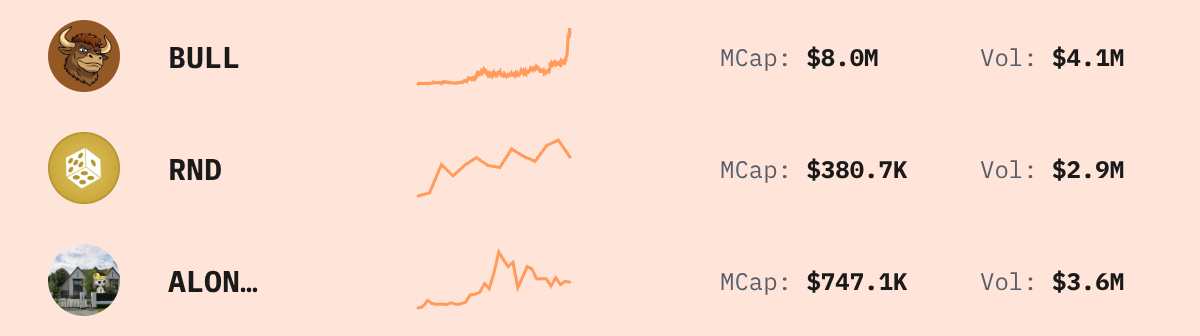
Also notable on Solana: new token launches including RandomCoin, 46 Tongdean Ave, and Baby Bull appeared in the new listings feed — names that suggest speculative memecoin activity continues at pace on Solana's low-cost launch infrastructure.
Binance Delists WAN from Margin Trading
On the exchange operations side, Binance has delisted WAN (Wanchain) from its isolated margin trading product, effective April 10, 2026. With a market cap of approximately $13 million, WAN is a relatively small asset, and margin delistings of this kind typically reflect low utilisation and liquidity concerns rather than any specific protocol issue. Traders carrying leveraged WAN positions on Binance Margin will have needed to close or migrate those positions ahead of the cutoff.
Outlook
The dominant themes heading into the week are security and governance fragility — the Drift-North Korea connection and Aave's contributor exodus both point to structural challenges that the industry needs to address beyond pure price performance. Iran's Bitcoin toll announcement adds a geopolitical dimension that could attract broader institutional and regulatory attention. With price data currently unavailable across major assets, the narrative landscape is being shaped almost entirely by fundamentals and macro-level developments, which may set the tone for how markets respond once clearer price signals emerge.