Binance Expands Into TradFi with New Perpetual Contracts
One of the most structurally significant developments this week came from Binance Futures, which announced the launch of multiple USDⓈ-margined TradFi perpetual contracts. This move signals a continued blurring of lines between traditional finance and on-chain derivatives markets. Rather than simply listing more crypto-native assets, Binance is positioning itself to capture traders who want crypto-style leverage and liquidity mechanics applied to conventional financial instruments. The scale and direction of this expansion underlines how centralised exchanges are competing for a broader pool of capital beyond the existing crypto-native user base.
OpenAI Pre-IPO Futures Land on Binance
Alongside the broader TradFi push, Binance separately confirmed the launch of an OPENAIUSDT USDⓈ-margined perpetual contract offering pre-IPO trading exposure to OpenAI. This is a notable product category — it allows traders to speculate on OpenAI's implied valuation before any public listing, using crypto infrastructure. Pre-IPO perpetuals have gained traction as a mechanism for price discovery on private companies, and OpenAI is arguably the highest-profile candidate yet to receive this treatment on a major exchange. The contract was announced on May 26, reflecting how quickly crypto markets are moving to bridge private equity and on-chain speculation.
MicroStrategy Deploys $1.38B Into Discounted 2029 Convertibles
MicroStrategy made headlines again after deploying $1.38 billion of its $2 billion cash reserves to purchase discounted 2029 convertible notes. The move is consistent with the company's well-documented strategy of using debt instruments and capital markets activity to increase Bitcoin exposure, though this particular transaction involved buying back its own converts at a discount rather than directly purchasing Bitcoin. The scale of the deployment — using roughly 69% of its available cash in a single transaction — points to continued confidence in the convertible bond strategy as a tool for balance sheet management. Observers will be watching whether subsequent capital raises are directed back toward BTC accumulation.
Trump Reaffirms CFTC Authority Over Prediction Markets
In a statement that will have regulatory implications across the industry, President Trump confirmed that the CFTC will maintain exclusive authority over prediction markets, praising CFTC Chairman Mike Selig for his handling of the crypto sector. Trump also reiterated his position that other nations are actively attempting to displace the United States as the global centre of crypto activity. The political messaging here is deliberate — framing crypto as a matter of national competitiveness. For the prediction markets sector specifically, CFTC-only oversight provides a degree of regulatory clarity that platforms like Polymarket have been navigating carefully. Defining the regulator definitively removes one layer of uncertainty for operators.
fUSD Launches as a GENIUS Act-Ready Stablecoin
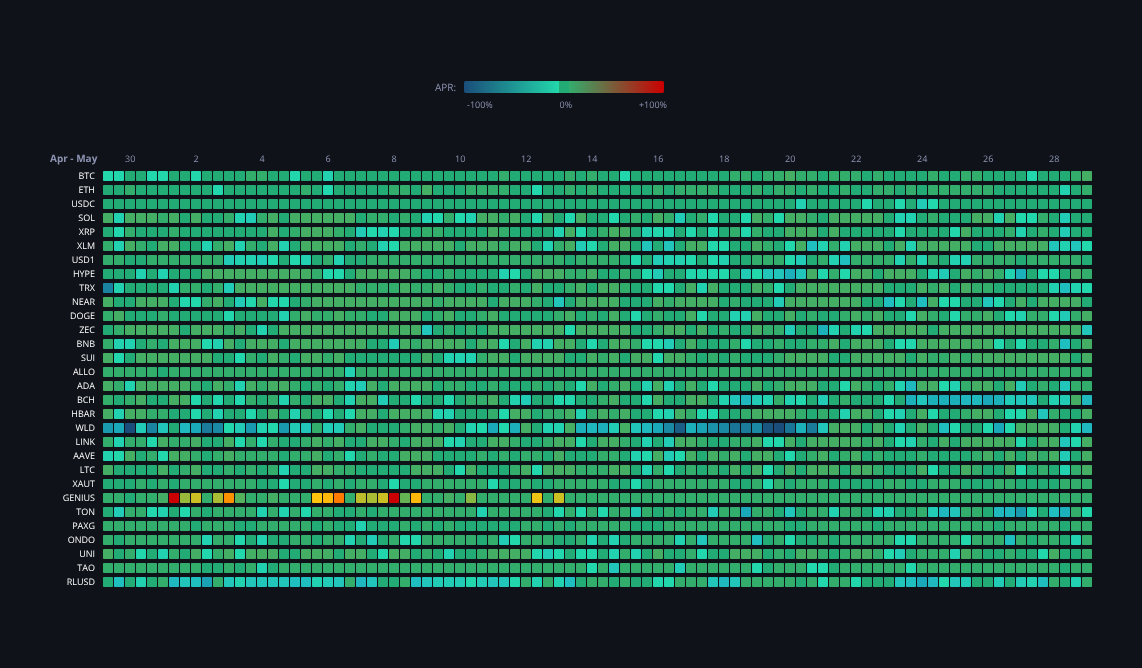
Falcon Finance and Anchorage Digital Bank jointly announced the launch of fUSD, described as a "GENIUS-ready" stablecoin with yield capabilities hosted on Ceffu. The GENIUS Act — still working its way through the US legislative process — has already begun shaping product development, with issuers building compliance frameworks in anticipation of its passage. Falcon Finance carries a market cap of approximately $266 million, while the GENIUS token sits around $220.6 million. The partnership with Anchorage Digital Bank, a federally chartered digital asset bank, gives fUSD institutional credibility and positions it within the regulated stablecoin ecosystem that the GENIUS Act is designed to formalise. The yield component, distributed via Ceffu, adds a competitive dimension in a stablecoin market where passive returns have become an increasingly important differentiator.
Outlook
The dominant themes emerging from this week's news cycle are institutional infrastructure and regulatory consolidation. Binance's TradFi perpetuals and OpenAI pre-IPO contract reflect exchanges competing aggressively for capital beyond crypto's existing user base. MicroStrategy's convertible note manoeuvre and the fUSD launch both demonstrate how sophisticated treasury and product strategies are becoming standard practice at the institutional layer. Trump's CFTC remarks add a layer of political backing to the sector heading into a period of significant legislation. With the GENIUS Act framework influencing product design in real time and pre-IPO futures bridging private markets and crypto exchanges, the next several weeks are likely to see further convergence between traditional finance and digital asset markets.