Breaking: Binance Hot Wallet Appears to Be Under Attack
The crypto market woke up on October 30, 2026 to what may be one of the largest exchange security incidents in the industry's history. On-chain data began circulating in the early hours indicating that Binance's hot wallet was being systematically drained, with unconfirmed estimates pointing to losses of approximately $2.53 billion across more than 60 tokens on Ethereum.
The initial alarm was raised by on-chain monitoring services shortly after 04:39 UTC, with transaction data pointing to a specific Ethereum transaction hash as early evidence of unusual outflows. Within minutes, the reports had spread widely across crypto news channels, and the scale of the alleged drain began to come into focus.
Tether Acts Swiftly — Circle Yet to Respond
One of the most significant developments in the hours that followed was the response from stablecoin issuers. Tether confirmed it had frozen more than $1.567 billion in USDT linked to wallets associated with the suspected hack, according to a Bloomberg report citing Tether CEO Paolo Ardoino. This represents a substantial and unusually fast freeze, suggesting Tether had been coordinating with Binance or law enforcement behind the scenes before any public announcement.
However, the picture is not fully contained. Reports indicate that approximately $820 million in USDC remains unfrozen in wallets connected to the incident. Circle, the issuer of USDC, had not taken public action as of the time of reporting, prompting calls across social media for the company to intervene. With USDC's market cap sitting at $71.5 billion, the reputational stakes for Circle to act — or explain its inaction — are significant.
Binance and CZ Respond: "User Funds Are Safe"
At approximately 05:17 UTC, Binance issued an official statement acknowledging the situation: "Our teams are aware of reports of a potential security issue and are actively investigating." Shortly after, founder Changpeng Zhao (CZ) posted the now-familiar reassurance that "user funds are safe."
This is, of course, the standard first response from any exchange facing a security incident — and the crypto community has learned to treat such statements with measured skepticism until a full post-mortem is published. The key questions remaining unanswered at this stage are: which specific wallets were compromised, how the attacker gained access, and what the verified total loss figure is.
The Scale in Context
If the $2.53 billion figure is confirmed, this would dwarf most previous exchange hacks on record. For context, the Ronin Network hack in 2022 totalled approximately $625 million, and the Mt. Gox collapse involved around $450 million in bitcoin at the time of the event. A verified $2.5 billion breach would represent an entirely new order of magnitude for exchange-level exploits.
It is worth emphasising that these figures remain unconfirmed as of the time of writing. On-chain data is verifiable at the transaction level, but attributing wallet ownership definitively to Binance — and determining whether any recovered or frozen assets reduce the net loss — requires further disclosure from the exchange itself.
Stablecoin Freeze Mechanics: What This Reveals
The speed and scale of Tether's freeze is notable from a technical and policy standpoint. Tether froze over $1.567 billion in USDT within roughly 30 minutes of reports going public — a response time that suggests either pre-established emergency protocols or prior coordination. This is a reminder that while USDT and USDC are described as decentralised stablecoins by some, their issuers retain significant centralised control, including the ability to blacklist addresses and freeze funds at will.
For the roughly $820 million in USDC still sitting unfrozen in the suspected hacker's wallet, every minute without a Circle response represents a window for further movement or laundering through bridges, mixers, or decentralised exchanges.
Trending Tokens React
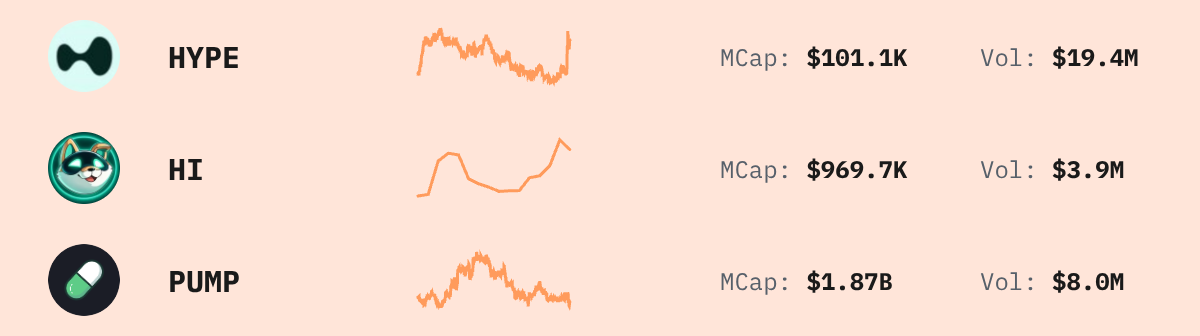
On Solana, tokens including HYPE, HYPER INU, and a token simply called Pump were trending in the immediate aftermath, likely benefiting from the chaotic attention cycle that follows major exchange news. On Ethereum, Pepe and ENA were among the most-watched tokens. Whether these moves are directly correlated with the Binance situation or represent independent activity is difficult to determine without reliable volume and price data at this time.
Outlook
The next 12 to 24 hours will be critical. Markets will be watching closely for a verified damage assessment from Binance, any action from Circle on the unfrozen USDC, and whether law enforcement or blockchain analytics firms such as Chainalysis are already tracking the movement of funds. Historically, large hacks trigger short-term panic and exchange outflows as users move assets to self-custody — that dynamic is likely already playing out. Until Binance provides a full, transparent accounting of what happened, the situation should be treated as developing and fluid.