Breaking: Binance Hit by Major Security Breach
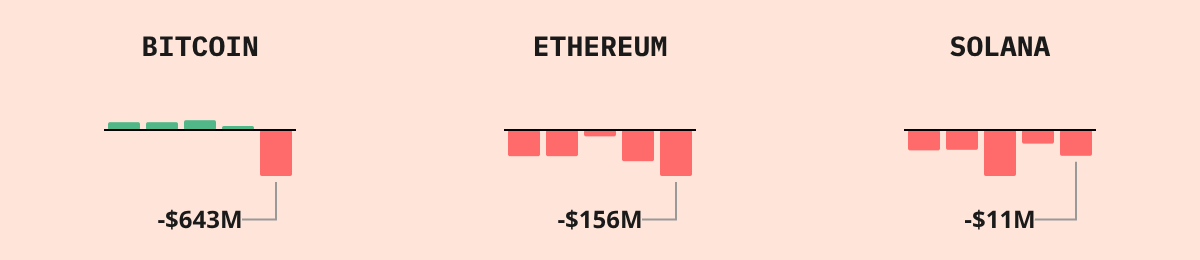
The final day of October 2026 has delivered one of the most significant security incidents in crypto exchange history. On-chain data shows approximately $5.643 billion in asset outflows from Binance-labeled wallets as of October 29 at 21:22 UTC, marking what appears to be a large-scale exploit that sent shockwaves across the entire industry.
Binance acknowledged the situation with a brief statement: "Our teams are aware of reports of a potential security issue and are actively investigating." Exchange founder CZ followed with his characteristic reassurance that "user funds are safe" — though the scale of on-chain movements has left many observers skeptical pending further transparency from the exchange.
Breaking Down the $5.6 Billion Outflow
On-chain analysts have provided a detailed breakdown of the asset movements across multiple networks. The largest portion — $3.528 billion — moved on Ethereum, followed by $1.449 billion on Bitcoin and $628 million on Tron. A further combined $38 million flowed across Arbitrum, Optimism, and Base. These figures were calculated to exclude change outputs and avoid double-counting subsequent transfers and swaps, suggesting the methodology is conservative rather than inflated.
The multi-chain nature of the outflows is notable. Attackers moving funds simultaneously across Ethereum, Bitcoin, and Tron suggests either a highly sophisticated operation or, at minimum, deep familiarity with Binance's internal wallet infrastructure.
Tether and Circle Move Fast to Freeze Funds
In an unusually swift response, stablecoin issuers acted quickly to limit the damage. Tether froze over 1.567 billion USDT, according to CEO Paolo Ardoino, as reported by Bloomberg. Circle, the issuer of USDC, has frozen an estimated 823 million USDC. In total, at least $2.316 billion in stablecoins have been frozen across both issuers.
The freezes did not happen without delays, however. Early reports flagged that $820 million in USDC remained unfrozen in hacker-linked wallets for a period, prompting public calls for Circle to act. Additional tranches continued to emerge — one transaction alone involved a further $200 million USDT that was reportedly frozen rapidly after identification on Etherscan.
The speed of issuer response will likely become a central talking point in post-incident analysis. The ability to freeze nearly $2.3 billion of a $5.6 billion exploit represents a meaningful mitigation — but also underscores the degree to which centralized stablecoin issuers function as a backstop in crisis scenarios.
Scale and Context: How Big Is This?
To put this in perspective, the $5.6 billion figure would make this one of the largest exchange hacks ever recorded — surpassing the 2022 FTX collapse in terms of on-chain outflow volume, though the circumstances differ significantly. The 2014 Mt. Gox incident involved approximately $450 million at the time. The 2022 Ronin Bridge hack involved around $625 million. If the on-chain figures are confirmed as a genuine exploit rather than a controlled migration, the Binance 2026 incident stands in a category of its own.
It is worth noting that Binance has not yet confirmed the nature of the outflows. The possibility of an internal wallet restructuring or emergency cold storage migration has not been formally ruled out, though the concurrent stablecoin freezes by Tether and Circle strongly imply the funds were identified as stolen rather than internally moved.
Stablecoin Market in Focus
USDC currently sits at a market cap of $71.5 billion, while Tron's TRX carries a market cap of $31.5 billion — both relevant given the stablecoin freeze activity and the volume of outflows routed through Tron's network. Arbitrum's ARB stands at a $1.6 billion market cap, a reminder of how much liquidity now flows through Layer 2 infrastructure that was also implicated in the outflow breakdown.
Outlook
The coming 24–72 hours will be critical. Markets will be watching for an official incident report from Binance detailing the attack vector, the total confirmed loss, and the status of user funds. The pace of stablecoin freezes suggests close coordination between Binance's security team and issuer compliance departments — but roughly $3.3 billion in non-stablecoin assets remain unaccounted for and significantly harder to freeze or recover. Expect heightened volatility, potential liquidity stress on exchanges sharing exposure to Binance, and intense regulatory scrutiny in the days ahead. This is a developing story.