The Biggest Exchange Hack in Crypto History
The crypto world woke up to staggering news this week: approximately $6.26 billion in assets were drained from Binance wallets and moved to attacker-controlled addresses across nine separate blockchains. On-chain data confirmed outflows hitting Ethereum, Bitcoin, Tron, XRP, Solana, Arbitrum, Avalanche, Optimism, and Base — making this not just the largest exchange hack on record, but one of the most technically sophisticated cross-chain operations ever executed against a centralized platform.
The scale of the breach is difficult to overstate. For context, the previous landmark exchange hacks — Mt. Gox, Coincheck, FTX's collapse — pale in comparison to a single coordinated extraction of this magnitude. The fact that funds moved simultaneously across nine chains suggests either a deep compromise of Binance's internal key management infrastructure, or a highly coordinated attack with insider knowledge of wallet architecture.
AAVE Freezes Lending Markets as a Precautionary Measure
One of the faster-moving protocol responses came from AAVE, which froze its lending markets specifically to prevent the Binance attacker from using stolen assets as collateral to borrow against. This kind of preemptive on-chain governance action highlights both the maturity of DeFi's risk management tooling and the very real systemic risk posed when billions in liquid assets fall under the control of a malicious actor.
AAVE carries a market cap of approximately $2.1 billion, and the freeze — while protective — will have temporarily disrupted normal lending and borrowing activity for the protocol's users. The speed of the response, however, is likely to be viewed positively by the broader DeFi community as a demonstration that protocol governance can act decisively under pressure.
FBI and Secret Service Join the Investigation
Reuters reported that Binance is now cooperating with the FBI and the U.S. Secret Service following the breach. This marks a significant escalation in the official response and suggests that U.S. authorities are treating the incident as a matter of national financial security, not merely a private corporate matter.
Law enforcement involvement at this level typically means subpoenas, blockchain forensics firms, and international coordination. Agencies like the FBI's cyber division have prior experience tracing and recovering crypto from major hacks — most notably the partial recovery of funds from the Colonial Pipeline ransomware attack. Whether any meaningful recovery is possible here, given the cross-chain complexity, remains to be seen.
CFTC Moves Quickly to Frame the Regulatory Narrative
Perhaps the most politically telling response came from CFTC Chairman Michael Selig, who appeared on CNBC in the aftermath of the hack and used the moment to advocate for voluntary federal registration. Selig's position: exchanges that register with the CFTC gain access to a federal regulatory framework that could provide both oversight and, implicitly, a degree of credibility with users.
The timing of the statement is unlikely to be coincidental. Regulators have long sought a foothold in exchange oversight, and a $6.3 billion hack provides significant political leverage to push that agenda forward. Whether this translates into concrete legislation or remains at the level of public positioning will depend heavily on Congressional appetite in the current session.
Binance Postpones PREDICT Token Listing
Amid the chaos, Binance issued a notice that the planned listing of Predict (PREDICT) has been postponed. The announcement was brief and offered no revised timeline. Given the circumstances, the delay is unsurprising — the exchange's operational priorities have clearly shifted, and proceeding with a high-profile new listing during an active security incident and federal investigation would have been difficult to justify.
Trending Tokens Reflect the Moment's Cultural Noise
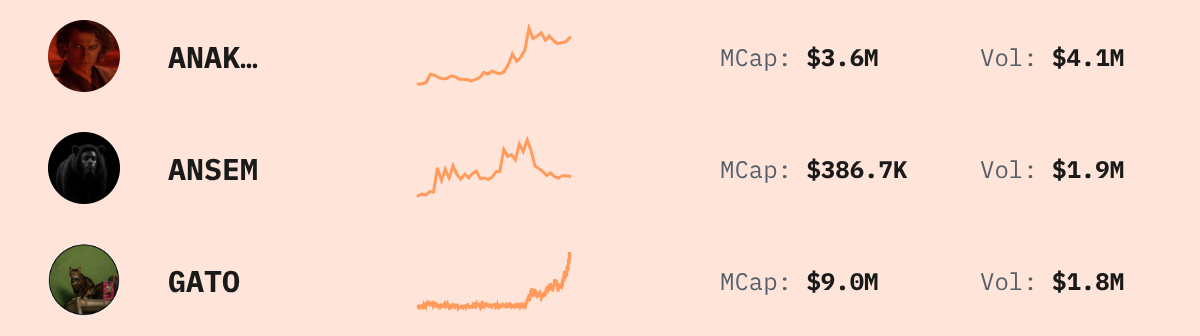
Even against the backdrop of a historic hack, speculative activity on-chain continued uninterrupted. Trending tokens across Solana, Ethereum, and Base included names like Anakin Skywalker, GTA6CAT, GTA VI, and NVIDIA Corporation — the usual mix of pop-culture meme tokens that emerge regardless of macro conditions. None showed meaningful volume, and they serve more as a barometer of retail attention than any signal of structural market activity.
Outlook
The coming days will be defined by two parallel tracks: the on-chain forensics race to trace and potentially freeze attacker funds before they are laundered through mixers or cross-chain bridges, and the regulatory and legal proceedings that will follow. Binance's cooperation with the FBI and Secret Service is a necessary step, but the exchange faces severe reputational damage regardless of outcome. For the broader market, the key question is whether user confidence in centralized exchanges takes a sustained hit — and whether this accelerates any meaningful migration toward self-custody or decentralized alternatives. Watch for further AAVE governance votes, any on-chain movement of the stolen funds, and official statements from Binance leadership in the days ahead.