Binance Confirms Social Engineering Attack on Employee
The week's most significant security story continues to develop: Binance has confirmed that hackers successfully compromised an employee's computer through a fake job interview scheme, subsequently using that access to steal cryptocurrency. According to Reuters, the attack was not a brute-force technical intrusion — it was a carefully orchestrated social engineering operation designed to gain trusted access from the inside.
What makes this breach particularly notable is the method of escalation. Once inside the compromised machine, the attacker leveraged an internal Binance tool to gain control over wallets. The incident underscores a growing trend in crypto security breaches: attackers are increasingly targeting human vulnerabilities rather than attempting to crack cryptographic defenses directly. Fake recruitment outreach — often impersonating legitimate firms or headhunters — has become a well-documented vector in the industry, previously linked to state-sponsored groups targeting crypto firms.
Binance has not publicly disclosed the full scope of funds affected, but the confirmation of wallet access via internal tooling suggests the breach was more than superficial. The exchange appears to be cooperating with Reuters and presumably with law enforcement. No further operational details have been released at this stage.
French Bank Credit Mutuel Arkea Loses $130M in Separate Hack
Independent of the Binance incident, on-chain investigator ZachXBT identified the entity behind a separate $130 million hack as Credit Mutuel Arkea, a major French financial institution managing approximately $235 billion in assets under management. The scale of the targeted firm is striking — this is not a crypto-native startup but a systemically significant European bank with deep traditional finance roots.
The details of exactly how the funds were accessed or what assets were taken have not been fully disclosed, but ZachXBT's attribution adds credibility to what might otherwise be an unverified claim. The event signals that sophisticated threat actors are broadening their targets beyond crypto-native platforms and are actively probing traditional financial institutions that hold or interact with digital assets. A loss of $130M from an institution of this size, while not existential, is a material and embarrassing breach that will likely draw regulatory scrutiny across the EU.
GitBook Also Hit: "Sophisticated" Agents Breach Documentation Platform
Rounding out a bruising week for industry security, GitBook — a widely used documentation platform popular across Web3 development teams — disclosed a security breach on November 2 attributed to what it described as "sophisticated agents." In response, GitBook revoked all personal API tokens and urged all users to immediately rotate their secrets and credentials.
For crypto teams, GitBook repositories often contain sensitive technical documentation, internal architecture notes, and occasionally credentials or keys if developers are not rigorous about separation. The timing alongside the Binance incident raises broader questions about coordinated campaigns targeting crypto infrastructure at multiple layers simultaneously. Any development team using GitBook should treat the revocation of tokens as urgent, not optional.
MicroStrategy's STRC Reclaims $100 for the First Time Since May
Amid the security headlines, there was a notable market milestone on the MicroStrategy side of the ledger. $STRC — MicroStrategy's preferred stock instrument — hit $100 for the first time since May, pushing the instrument's market capitalisation to approximately $5 billion. This recovery reflects renewed institutional confidence in the MicroStrategy ecosystem, which remains one of the most prominent vehicles for leveraged Bitcoin exposure in public markets.
STRC's return to the $100 level is psychologically significant. The instrument had been trading well below that threshold for much of the intervening months, and the reclaim signals that investors are once again pricing in a more constructive macro and Bitcoin environment heading into the final weeks of 2026.
Trending Tokens: Meme Activity Across Chains
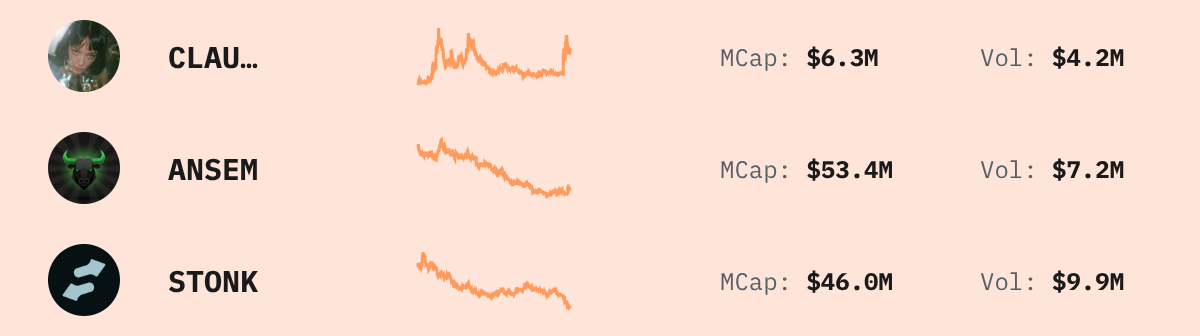
On the speculative end of the market, trending tokens across major chains leaned heavily into meme and pop-culture themes. GTA VI continued to surface as a trending token on Ethereum, while SpaceX Inu led activity on BNB Smart Chain. On Solana, newly launched token Nvidia - Backpack Securities caught attention — a name that blends two prominent brands in an apparent attempt to ride institutional name recognition. These tokens carry the hallmarks of short-cycle attention plays and are consistent with the kind of activity typically seen when broader market sentiment is heating up.
Outlook
The dominant theme heading into mid-November 2026 is security risk at scale. Three significant breaches — Binance, Credit Mutuel Arkea, and GitBook — surfaced within days of one another, pointing to either a coordinated threat campaign or a broader escalation in attacker sophistication. For market participants, the more immediate watch item is how Binance's situation resolves and whether further wallet exposure is revealed. On the more constructive side, STRC's return to $100 and ongoing meme token activity suggest underlying market appetite remains present. The next few sessions will be telling.